Articles
2027: Who Will Liberate Ohuhu From Aguocha’s Family Grip? – BY Our Reporter


2027: Who Will Liberate Ohuhu From Aguocha’s Family Grip? – BY Our Reporter
As Rep. Obi Aguocha preaches against political inheritance, critics question alleged concentration of appointments and political opportunities around his family
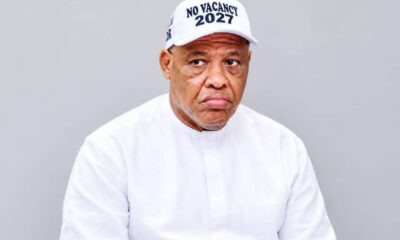
The political battle ahead of the 2027 general elections is increasingly assuming a new dimension in Ohuhu, with questions being raised over what critics describe as the growing concentration of political influence around the family and immediate political network of the member representing Ikwuano/Umuahia North/South Federal Constituency, Hon. Obi Aguocha.
The controversy is particularly curious because Aguocha has himself raised the question of whether political positions should become the preserve of one family
But his critics are now turning that question back on him.
They are asking: If political positions do not belong to one family, should political appointments, influence and access to political opportunities be concentrated within the family and associates of one politician?
It is now confirmed that since his emergence on the political scene, members of his extended family have benefited substantially from political appointments and opportunities connected to government.
Among the claims being made is that his brother-in-law, Aham Uko had enjoyed appointment as Commissioner
He was first appointed Commissioner for Environment, and later reappointed Commissioner for Financial. This same brother-Inlaw to Aguocha has now been appointed Director to a Campaign Council
It is also an established fact that another relative was nominated to represent his ward in the Abia North Local Government Area administration, while the five legislative aides attached to his office have been drawn largely from his family circle
Those appointments have created an uncomfortable question for a politician who has positioned himself as an advocate of openness and opposition to political family monopolies.
THE CONTRADICTION
The accusation being levelled against Aguocha is not that his relatives are citizens without constitutional rights to participate in politics.
Rather, his critics say the issue is the apparent contradiction between his rhetoric and the conduct attributed to his political establishment.
Aguocha has reportedly asked:
“Are political positions the exclusive inheritance of one family, or do they belong to all qualified and deserving citizens?”
It is a legitimate democratic question.
But critics insist that it should be applied universally—including to the political structure surrounding the lawmaker himself.
In their view, the test of political integrity is not merely the ability to expose the alleged shortcomings of established political families. It is also the willingness to subject one’s own political network to precisely the same scrutiny.
That is why some opponents have begun portraying Aguocha as operating with two political faces: one demanding an open political space for others, while allegedly presiding over a political arrangement in which relatives and close associates enjoy privileged access to public opportunities.
Whether that characterization survives serious scrutiny, however, is a question for the electorate and the evidence.
THE ORJI QUESTION
The debate has inevitably brought the political history of the Orji family into the argument.
Chief T. A. Orji did not emerge directly into elective politics through family inheritance. His public career included service as an Administrative Secretary with the Independent National Electoral Commission before his appointment as Chief of Staff to the then Governor of Abia State, Orji Uzor Kalu.
He later became Governor of Abia State, serving for eight years, before subsequently representing Abia Central Senatorial District in the National Assembly for another eight years.
His son, Rt. Hon. Chinedum Enyinnaya Orji, also established his own electoral record.
Chinedum Orji was elected twice into the Abia State House of Assembly and subsequently became Speaker of the House, serving for four years.
These facts do not make political office a family entitlement. They do, however, complicate the simplistic argument that the participation of members of the same family in politics automatically constitutes political monopoly.
There is a fundamental difference between family participation in politics and family ownership of politics. The first is permitted by democracy. The second is what democracy must guard against.
NO FAMILY IS POLITICALLY INDISPENSABLE
The larger question confronting Ibeku and Ohuhu ahead of 2027 is therefore bigger than Aguocha, the Orjis or any other political family.
It is whether political power will remain open to every qualified citizen or whether competing political establishments will simply replace one form of political dominance with another.
No politician be disqualified merely because a member of his family has previously held office.
The proper democratic test is straightforward:
Did the individual contest? Did the electorate have a choice? Was the election credible? What did the candidate accomplish? And can another qualified citizen freely compete?
Those are the questions that matter.
2027: THE VOTER AS JUDGE
The 2027 election provides Ibeku and Ohuhu with an opportunity to settle these arguments at the ballot box.
Rather than allowing politicians to define the debate exclusively through accusations and counter-accusations, voters can demand evidence.
They can ask Aguocha to account for his record in the House of Representatives.
They can question the circumstances surrounding appointments linked to his political network.
They can examine the records of the political families he criticises.
The electorate should also reject the dangerous idea that political disagreement must inevitably become a war between families. The real battle should be over ideas, competence, accountability, representation and performance.
THE QUESTION AGUOCHA MUST ANSWER
For all the political rhetoric surrounding the 2027 contest, one question may ultimately prove difficult for Aguocha’s critics to ignore:
If political positions belong to all qualified citizens, does that principle apply with equal force to the political appointments, opportunities and influence within his own political establishment?
If the allegations of family patronage are false, the appropriate response is not simply political outrage but evidence capable of settling the matter. If they are true, then the same democratic principle he invokes against political monopolies must apply to him.
That is the essence of political accountability. The people are entitled to choose individuals on the basis of competence, character, record, capacity and vision.
And that may be the most important question of all going into 2027: Will Ohuhu remain a political preserve of competing family establishments—or will its people finally insist that political power belongs, first and foremost, to the electorate?