Articles
Obi Aguocha and The Subject: A ₦40.89 Billion Question and a Decaying Health Centre at Home: Why Ikwuano/Umuahia Cannot Afford Another Term of Empty Representation – By Mandate 27 Group

Obi Aguocha and The Subject: A ₦40.89 Billion Question and a Decaying Health Centre at Home: Why Ikwuano/Umuahia Cannot Afford Another Term of Empty Representation – By Mandate 27 Group
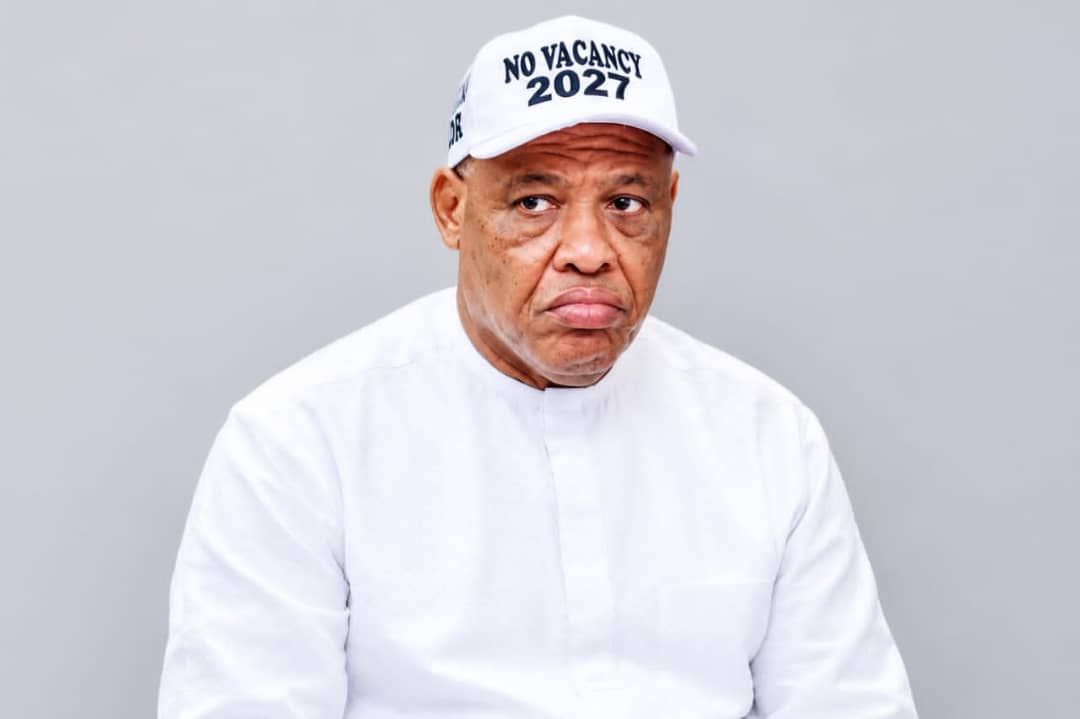
This is the condition of Afugiri Health Centre, located at Umuakam, Afugiri, in Ohuhu land, the home community of Hon. Obi Aguocha, the member representing Ikwuano/Umuahia Federal Constituency in the House of Representatives.
A health facility in such a state is not merely an eyesore; it is a direct warning about the gap between budgetary appropriation and the lived reality of the people the money was meant to serve.
On June 23, 2026, *The Guardian* reported that ₦40.89 billion was appropriated for 121 projects in the Ikwuano/Umuahia Federal Constituency across the 2024, 2025 and 2026 budget cycles, including the Zonal Intervention Projects schedules for 2024 and 2025.
The report stated that the figures were drawn line by line from national budgets published by the Budget Office of the Federation and BudgIT Nigeria.[1]
That is not a small sum. It is a staggering amount for a single federal constituency, and it raises a question that no amount of political noise should be allowed to bury: where are the projects?
Among the appropriations was ₦450 million specifically earmarked for the reconstruction of primary health centres in Ikwuano/Umuahia North and Umuahia South Federal Constituency. Yet, in Afugiri, Hon. Aguocha’s own community, the people are confronted with a health centre that tells a story of neglect, abandonment and failed representation.
If a lawmaker cannot point to a visibly reconstructed, functional primary health centre in his own community, how can he credibly ask the wider constituency to trust his account of billions allocated in their name?
Where are the health centres constructed or reconstructed by Hon. Obi Aguocha? Can the people see just one completed, equipped and operational facility that justifies the ₦450 million allocated for primary health care reconstruction? Can he publish the contract details, the implementing agency, the location, the completion status and the evidence of delivery? These are not hostile questions; they are the minimum demands of transparency in a democracy.
This intervention is not about Iko Onu, personal rivalry or partisan bitterness. It is about transparency, accountability and the dignity of the people of Ikwuano/Umuahia. Constituents deserve to know what became of the funds provided for constituency projects in their constituency.
They deserve to know whether the projects exist only as budget lines, press statements and social media claims, or whether they have become boreholes that yield water, classrooms that shelter children, roads that carry farmers’ produce and health centres that save lives.
*The Guardian* specifically reported that solar streetlights, medical supplies, boreholes, recreational centres, food support for indigent households, empowerment items and road works appeared in the budgets, with many entries marked “NEW.” The newspaper further noted that many residents say there is little on the ground to show for the allocations, and that the people are still waiting for Hon. Aguocha’s answers.
That is a devastating public verdict: after three budget cycles and ₦40.89 billion in appropriations, the constituency is still being asked to wait.[1]
Hon. Aguocha’s supporters may point to bills, motions, school rehabilitations, boreholes, streetlights and empowerment programmes. But representation is not measured only by the number of bills sponsored or photographs posted online. It is measured by whether the most basic institutions of community survival, namely health centres, schools, water sources and roads, are functioning where people live.
A legislator may sponsor twenty five bills and six motions, as one supportive report claims, but if the primary health centre in his own village remains dilapidated, the people are entitled to ask what practical value that legislative activity has delivered to their daily lives.[2]
The people of Ikwuano/Umuahia did not elect a public relations officer. They elected a representative to attract, monitor and ensure the delivery of federal projects. They elected someone to follow public money from appropriation to procurement, from contract award to completion, and from completion to visible public benefit. When ₦450 million is set aside for primary health centres and the visible evidence in Afugiri is decay, the burden of explanation rests squarely on the lawmaker, not on the suffering constituents asking questions.
This is why Rt. Hon. Engr. Chinedum Enyinnaya Orji presents a compelling alternative for Ikwuano/Umuahia Federal Constituency. His record in public office reflects a pattern of visible, community based intervention: road rehabilitation, water projects, electricity transformers, school renovations, youth empowerment and health outreach.
Reports of his constituency work cite more than 24 motorised borehole projects, over 29 communities connected to improved power supply through transformer interventions, and rehabilitation of community roads and public facilities. In Ohuhu alone, his previous interventions reportedly included a mini stadium at Saint William’s Memorial Secondary School, Afugiri; classroom construction; solar powered water projects; transformers; and empowerment support for women and young people.
The distinction is simple. Ikwuano/Umuahia needs a representative whose work can be inspected, touched and used, not one whose performance must be explained through press releases while a health centre in his own community stands as evidence of neglect. The people need someone who understands that a budget allocation is not an achievement until it becomes a functional service in a community.
The people of Ikwuano/Umuahia should therefore reject the politics of appropriation without delivery. They should demand a full, itemised, publicly verifiable account of the ₦40.89 billion allocated to the constituency between 2024 and 2026. They should demand proof of the ₦450 million for primary health centre reconstruction. And they should ask why Afugiri Health Centre, in the lawmaker’s own community, remains in its present condition.
Constituents are not asking for favours. They are asking for the return of their mandate to purpose. They are asking for representation that converts public money into public good. Until Hon. Obi Aguocha provides clear, credible and verifiable answers, the people of Ikwuano/Umuahia have every right to feel disappointed, and every right to seek a more accountable alternative in Rt. Hon. Engr. Chinedum Enyinnaya Orji.