ECONOMY
Tinubu: Teaching Stock Market Trading in Universities Will Build Prosperity in Nigeria

Tinubu: Teaching Stock Market Trading in Universities Will Build Prosperity in Nigeria
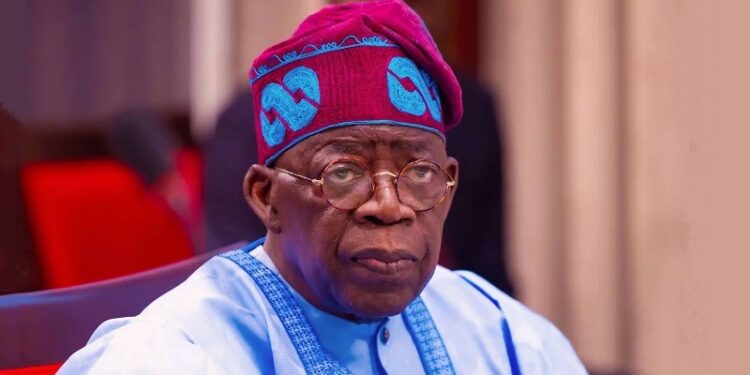
President Bola Ahmed Tinubu has called for stronger capital-market education among Nigerian undergraduates, arguing that teaching students about the stock market could help build a more prosperous and investment-driven economy.
Tinubu made the remarks during a meeting with leaders of the Nigerian Exchange Group (NGX) in August 2026.
Therein, he discussed the performance of Nigeria’s capital market, private-sector investment and his administration’s ambition of building a $1 trillion economy.
‘We Can Build a Nation of Prosperity’:
The President said greater knowledge of the capital market could encourage young Nigerians to become informed investors and strengthen private-sector participation in the economy.
“If we can teach this in the classroom to our undergraduates… we can build a nation of succession and prosperity that is our own,” Tinubu said.
He argued that investment education could encourage Nigerians to understand risk, make informed investment decisions and support businesses through the capital market.
The President also linked the development of the capital market to his broader economic reforms and efforts to encourage private-sector investment.
Tinubu Highlights Market Growth:
Tinubu cited the substantial increase in Nigeria’s market capitalisation since 2023.
According to figures referenced by the President, market capitalisation has risen from about ₦30 trillion in 2023 to approximately ₦160 trillion.
He expressed optimism that it could reach ₦230 trillion by the end of 2026.
Independent market reporting also indicates that Nigerian equities reached about ₦160 trillion in market capitalisation during 2026.
Tinubu attributed the growth partly to economic reforms designed to strengthen the investment environment and encourage greater private-sector participation.
He also pointed to the Dangote refinery as an example of the type of large-scale private investment he believes Nigeria should encourage.
President Targets $1 Trillion Economy:
Tinubu said Nigeria possesses the population, human capital and entrepreneurial capacity required to pursue a $1 trillion economy.
He urged Nigerians to consider what the country can produce competitively and how it can collaborate with other nations to expand its economic base.
The President also spoke about the possibility of transforming major state-owned enterprises, including NNPC, into more commercially oriented entities.
He said the long-term objective should include greater private-sector participation and, potentially, the listing of government assets on the capital market.
How Capital-Market Education Could Help:
Greater financial and capital-market literacy could potentially increase participation in Nigeria’s formal investment system.
The Securities and Exchange Commission (SEC) already operates investor-education programmes covering investment basics, strategies, market risks and investor protection.
The Nigerian Educational Research and Development Council also identifies the SEC as a partner in developing capital-market studies for senior secondary schools.
The need for wider education is underscored by Nigeria’s relatively low participation in the capital market.
In 2025, the SEC’s Director-General said fewer than four per cent of Nigerian adults were active capital-market investors, with fewer than three million Nigerians participating.
If properly implemented, capital-market education could help young Nigerians understand shares, bonds, diversification, risk and long-term investing.
A more financially literate population could also improve household savings and channel more domestic capital towards businesses requiring funding for expansion, innovation and job creation.
Education Alone Cannot Solve Nigeria’s Economic Problems:
However, capital-market education is not a substitute for broader economic reforms. Knowing how markets work does not automatically give citizens enough disposable income to invest.
High living costs, unemployment, inflation, limited access to financial services and concerns about institutional trust can all restrict participation.
There is also a risk that poorly designed programmes could encourage speculation rather than disciplined, long-term investment.
For the President’s proposal to deliver meaningful results, experts would need to pair classroom education with investor protection, transparent regulation, accessible financial services and stable macroeconomic conditions.
A Potential Shift in Economic Culture:
Tinubu’s proposal therefore goes beyond teaching students how to buy and sell shares.
At its most ambitious, it represents an attempt to cultivate an investment culture among younger Nigerians.
With the country’s capital market expanding rapidly but still attracting only a small proportion of the population, broader financial education could help bridge the gap between market growth and citizen participation.
The challenge will be ensuring that students learn not merely how to trade,.
They also need to learn how to evaluate businesses, understand risk, invest responsibly and distinguish genuine investment opportunities from financial scams.
If combined with stronger institutions and sustainable economic growth, capital-market education could become one component of Nigeria’s broader effort to mobilise domestic savings,
It can also strengthen private enterprise and pursue the $1 trillion economic ambition.
– This Dawn News